
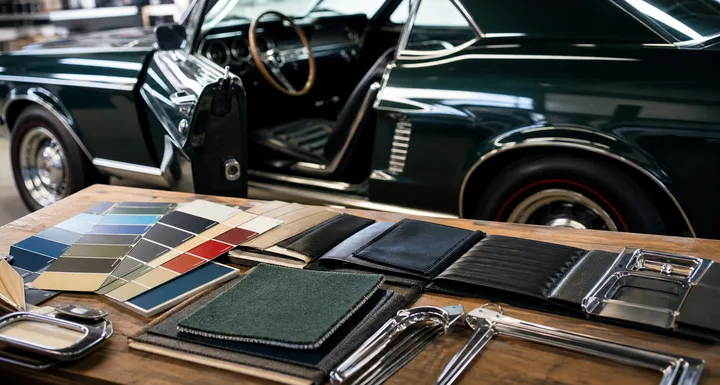
1967 Mustang interior colors include black, blue, red, saddle, Ivy Gold, aqua, and parchment. Read the complete TRIM code on the door data plate to identify the listed material and color combination. A name such as “black” alone does not identify the upholstery you should order.
What does a 1967 interior code tell you?
Copy the whole entry from the field marked TRIM, including any letters or suffixes. Photograph the full plate so you can also check the body code. The table below covers common standard and luxury bucket-seat vinyl codes; it does not cover every seat or material variation.
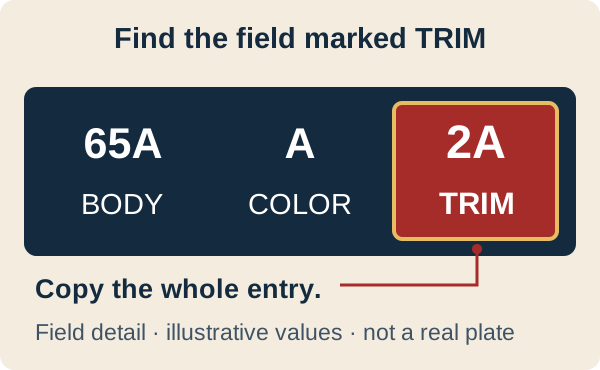
Two black interiors can need different parts
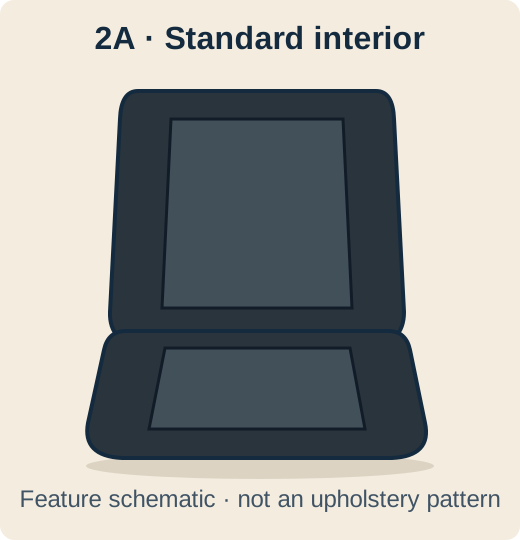
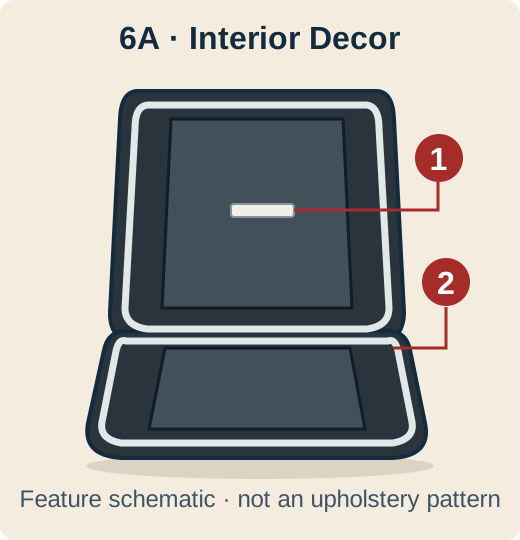
These drawings locate features; they are not upholstery patterns. Ford’s Interior Decor option adds details to the standard seat. The sketches do not reproduce exact seams, ornament shape, dimensions, or every piece of trim. Compare the installed seats with the supplier’s actual product photographs.
Comfort-Weave is a separate choice. Ford lists black Comfort-Weave bucket upholstery as 7A for standard trim and 5A with Interior Decor. Do not order it from a 6A code alone.
Based on Ford’s 1967 Mustang Illustrated Facts Book, printed pages 3, 8, and 18: plate layout, trim combinations, and seat features. If seats have been replaced, the tag and the installed equipment may require different parts.
Search 1967 Mustang interior and paint codes
32 reference entries
| Code | Type | Color | Check before ordering |
|---|---|---|---|
| 2A | Interior | Black | Standard; vinyl |
| 2B | Interior | Blue | Standard; vinyl |
| 2D | Interior | Red | Standard; vinyl |
| 2F | Interior | Saddle | Standard; vinyl |
| 2G | Interior | Ivy Gold | Standard; vinyl |
| 2K | Interior | Aqua | Standard; vinyl |
| 2U | Interior | Parchment / black | Standard; vinyl |
| 6A | Interior | Black | Luxury buckets; vinyl |
| 6B | Interior | Dark Blue | Luxury buckets; vinyl |
| 6D | Interior | Red | Luxury buckets; vinyl |
| 6F | Interior | Saddle | Luxury buckets; vinyl |
| 6G | Interior | Dark Ivy Gold | Luxury buckets; vinyl |
| 6K | Interior | Aqua | Luxury buckets; vinyl |
| 6U | Interior | Parchment | Luxury buckets; vinyl |
| A | Paint | Raven Black | Confirm a physical sample |
| B | Paint | Frost Turquoise | Confirm a physical sample |
| D | Paint | Acapulco Blue | Confirm a physical sample |
| E | Paint | Beige Mist | Confirm a physical sample |
| F | Paint | Arcadian Blue | Confirm a physical sample |
| I | Paint | Lime Gold | Confirm a physical sample |
| K | Paint | Nightmist Blue | Confirm a physical sample |
| M | Paint | Wimbledon White | Confirm a physical sample |
| Q | Paint | Brittany Blue | Confirm a physical sample |
| T | Paint | Candyapple Red | Confirm a physical sample |
| V | Paint | Burnt Amber | Confirm a physical sample |
| W | Paint | Clearwater Aqua | Confirm a physical sample |
| X | Paint | Vintage Burgundy | Confirm a physical sample |
| Y | Paint | Dark Moss Green | Confirm a physical sample |
| Z | Paint | Sauterne Gold | Confirm a physical sample |
| 4 | Paint | Silver Frost | Confirm a physical sample |
| 6 | Paint | Pebble Beige | Confirm a physical sample |
| 8 | Paint | Springtime Yellow | Confirm a physical sample |
Type Interior to show only trim entries, or search a full code such as 2U. Parchment combinations deserve a close check: 2U is listed with black, while 6U is abbreviated here as parchment. Confirm the full material and accent details in your source and the supplier’s sample.
A blank, unusual, extended, bench-seat, or ComfortWeave code needs a fuller reference. Do not choose the closest-looking entry just because a code is missing from this table.
Paint code, current paint, and replacement paint are separate things
The COLOR field records a paint specification. It does not prove that the finish now on the car is original. For example, D identifies Acapulco Blue for 1967; Marti Auto Works explains that this paint used different names and codes in other model years. A code found on a different year’s chart can therefore mislead.
Write down three things: the code copied from the plate, what reliable records say, and what is on the car now. Keep a known repaint in its own entry. A changed color can be a perfectly reasonable owner choice; the history should describe it accurately.
How to choose upholstery without relying on a screen color
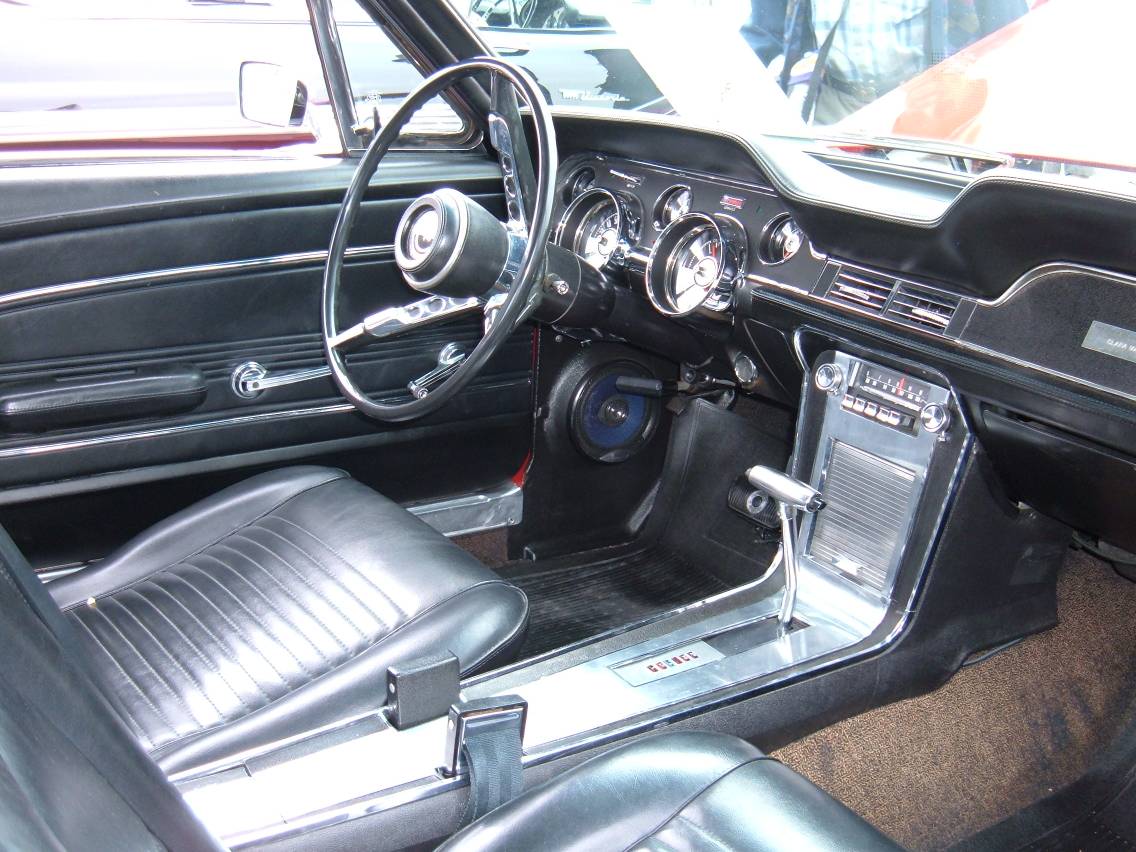
Photograph shown unaltered: © BrokenSphere / Wikimedia Commons, CC BY-SA 3.0. Open the full-size photograph.

- Photograph the seats and door panels. Include the pattern, piping, seams, mounting details, and any labels you can read without damage.
- Give the supplier the full specification. Include 1967, coupe/fastback/convertible, the complete trim code, the installed seat type, and known changes.
- Ask for physical samples. Compare vinyl grain, shade, sheen, and accent material. Review a paint spray-out with the painter before a paint order.
- Save the decision. Keep the agreed part number, sample reference, fitment reply, and return conditions together.
Ready to compare interior applications?
CJ Pony Parts’ Mustang catalog · Affiliate is one place to compare seat upholstery and interior parts. Confirm the exact application with the supplier before paying. If you buy through this link, we may earn a commission at no extra cost to you.
Sources and coverage
Code descriptions were checked against the licensed 1967 Ford shop manual sample, vehicle identification pages 1-2 and 1-4. It covers several Ford models, so body and seat application still matter. CJ Pony Parts’ Mustang data-plate reference provides a model-specific cross-check. The chart is a quick reference, not a complete reproduction of either source.
Exterior marketing names were checked against TCP Global’s 1967 Ford reference. Marti Auto Works explains paint codes, names, and special-paint records. References reviewed September 7, 2026.