Quick answer
Quick answer: how trim affects value
- GT cues, deluxe interiors, badges, wheels, consoles, and gauges need documentation before they justify a premium.
- Replacement trim is common, so treat trim as evidence to verify, not proof by itself.
- Door tags, receipts, old photos, and build documentation matter more than seller language.
Last reviewed: June 23, 2026. Use this as a starting point, then verify the specific car, part, or claim before spending money.
Decode the trim before you pay extra for it
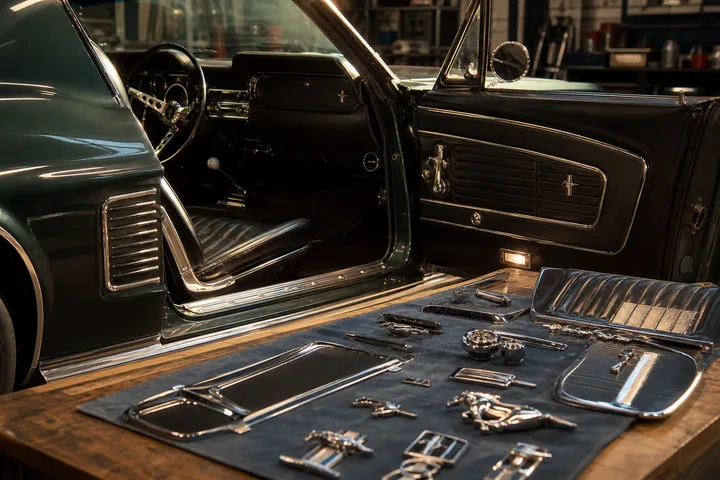
The 1967 model year has enough trim and equipment variety to make seller claims worth checking. GT equipment, deluxe interior details, consoles, gauges, steering wheels, exterior badging, and factory-style options can affect value, but only when the parts, codes, paperwork, and workmanship line up.
Key areas to decode
- GT equipment: do not rely on badges alone. Look for supporting equipment and documentation.
- Interior trim: standard and deluxe interiors change seat, door panel, steering wheel, and dash expectations.
- Console and gauges: value-affecting equipment should match the story and condition of the car.
- Exterior trim: missing or incorrect trim can be expensive and time-consuming to correct.
Buyer guidance
Trim can add value, but only after the car passes the structural and paperwork checks. A well-optioned car with hidden rust is still a problem. A plain car with a clean shell is often the better buy.
Why trim details matter
A 1967 Mustang can look correct at first glance while still mixing parts from several cars. That is not automatically bad for a driver, but it changes how you should value it. A clean, honest clone can be a fine driver when it is priced that way. A car priced as a documented GT or deluxe-interior example needs stronger proof. The more the seller leans on rare options, the more you should slow down and verify the story.
Common package confusion
GT-style visual parts are common on restored cars because they are attractive and widely available. That means fog lamps, stripes, styled steel wheels, and exhaust tips should be treated as clues, not final proof. Interior pieces are similar. A console, woodgrain accents, or upgraded seat trim can make the car nicer to drive, but they do not automatically prove factory deluxe trim.
For buyers, the practical question is whether the car is priced as a nice driver or as a documented option car. If it is priced as a driver, condition and workmanship may matter more than strict originality. If it is priced as a rare or highly optioned example, documentation becomes part of the purchase.
Inspection checklist
- Compare badges and trim to the seller’s paperwork rather than to the listing text alone.
- Check whether holes, brackets, wiring, and trim mounting points look factory, freshly added, or poorly patched.
- Confirm that interior upgrades fit cleanly and do not hide rust, wiring shortcuts, or missing hardware.
- Use option claims as negotiation topics when documentation is missing.
Restoration guidance
Before ordering trim, photograph what is currently on the car, verify body style and interior code, and compare against reliable references. Small clips, moldings, emblems, and interior pieces can add up quickly when bought twice.
About this site / how we recommend
How recommendations are handled here.
Guides are written for careful buyers and owners who want practical risk checks before style, story, or hype.
Fitment clarity, project phase, documentation, support, and enthusiast usefulness come before commissions or brand familiarity.
Approved outbound vendor/resource links may be affiliate links. Candidate vendor links remain non-monetized until approved affiliate programs are documented. Recommendations should still be useful without a purchase.
Specs, values, and vendor details change. Send the page URL and a source so the guidance can be corrected.
Decode before value claims
Trim details are evidence, not decoration.
GT cues, deluxe interior pieces, wheels, badges, consoles, and gauges need documentation before they justify a premium.
High-intent checklist
Verify trim and option claims
Keep the documentation, door-tag, and value checks handy before paying extra for GT, deluxe, or rare-option claims.
Editorial review
How we check this page
These pages are reviewed to stay useful, specific, skeptical, and buyer-protective. If something is not documented, the site should not present it as firsthand fact, and it should not read like sales copy.
67Mustang.com
June 23, 2026
This page is reviewed for practical 1967 Mustang usefulness: rust risk, documentation, fitment clarity, value context, and whether the advice still helps without a purchase.
Source and verification notes
- Factory-style specifications, VIN/body-code context, and shop-manual style service references.
- Recent collector-car listings, sold-result context, and condition-adjusted market checks.
- Vendor fitment catalogs, owner/community notes, and reader corrections when they improve a recommendation.
Send corrections or better sources through the contact/corrections page.


