
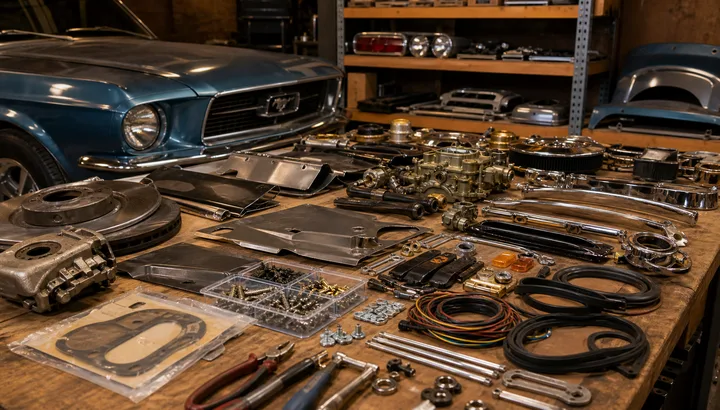
Looking for a 1967 Mustang parts catalog? Start with Classic Industries’ year-specific catalog or CJ Pony Parts’ Mustang catalog. For a missing original piece, compare used listings separately. Before paying, match the part to your body style, equipment, and any changes made to the car.
Links labeled affiliate may earn us a commission at no extra cost to you. As an Amazon Associate I earn from qualifying purchases.
Which catalog should you open?
| You are looking for | A useful starting point | Check before ordering |
|---|---|---|
| Replacement parts by model year | Classic Industries: 1967 Mustang catalog | Body style, application notes, included pieces, and current availability. |
| Mustang restoration and upgrade parts | CJ Pony Parts: Mustang catalog · Affiliate | Set the year to 1967 and check the equipment required by each listing. |
| An original, used, or discontinued piece | eBay: 1967 Mustang parts · Affiliate | The actual item’s markings, condition, photographs, and seller terms. |
| Factory service procedures | Forel Publishing: licensed Ford manuals | 1967 Mustang coverage, format, and any supplements you need. |
These are catalog starting points, not a ranking of every supplier. Compare the complete delivered order and ask for a fitment answer when an application is unclear.
Mechanical parts: identify what is fitted now
A car described as a “1967 V8 Mustang” still leaves important questions unanswered. For a brake part, record the actual brake configuration. For an engine or transmission part, identify the unit in the car. A door tag describes a specification; decades of repairs may have changed the equipment.
Photograph the existing part, its connections, and any readable markings. Send the photos with the details requested by the supplier. For safety-critical work, have the person doing the work confirm the part before you order it.
Body, seals, trim, and interior parts
Start with your body style: coupe, fastback, or convertible. Compare the exact location and mounting details. An interior color name does not establish seat type, material, or fit. Use the 1967 interior-code reference before asking for upholstery samples.
Example: choosing a door seal
You find two listings that both mention 1967. Before choosing, photograph the old seal, both ends, and the mounting area. Tell the supplier your body style and which door you are working on. Ask which measurements or profile details distinguish the listings.
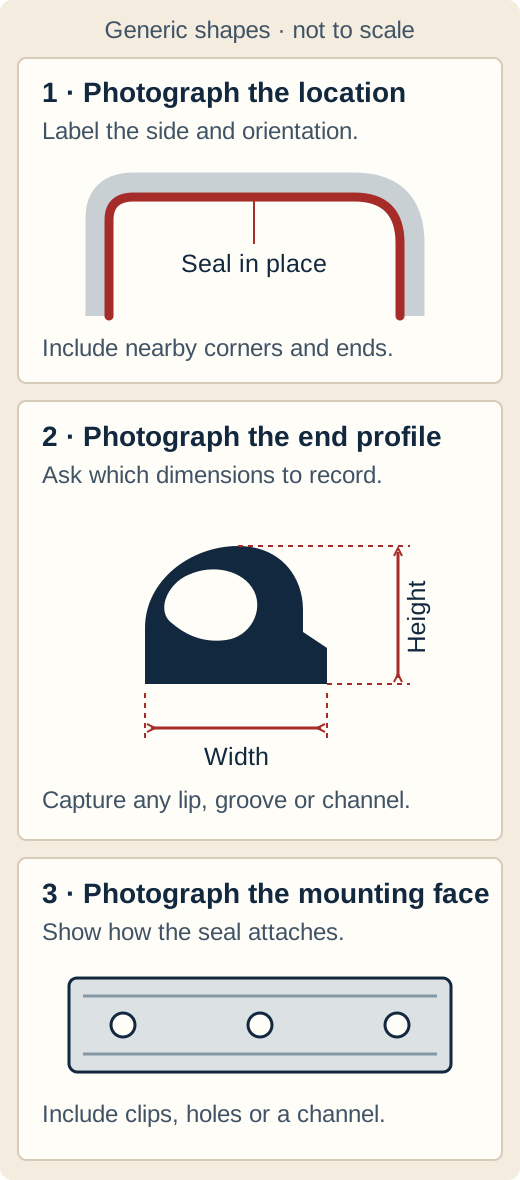
For the supplier’s perspective, see Steele Rubber Products’ guidance on identifying replacement seals. A profile photograph and measurements help narrow the search; they do not by themselves confirm an application.
For this task, CJ Pony Parts’ Mustang catalog · Affiliate is a place to compare applications. Save the supplier’s answer with the order. Do not discard the old part until the replacement has been checked.
For sheet metal, agree on the panel and trial-fit sequence with the installer before buying, cutting, or finishing it. A cheap panel is not a saving if the shop cannot use it for the agreed repair.
Buy a tool for the task in front of you
For an initial visual inspection, start with a phone camera, notebook, and a light you already own. If you need one, inspection lights · Amazon affiliate can help you photograph dim areas. More equipment does not replace an experienced inspection.
For repair procedures and specifications, check the licensed 1967 Ford shop manual sample before choosing the appropriate manual. For factory-record research, review Marti Auto Works’ report options.
Check a used part before it becomes your project
Ask for close photographs of damage, mounting points, and readable casting or part numbers. Confirm what comes with the item: brackets, clips, fasteners, lenses, or other small pieces. “OEM” in a listing title does not establish the identity or condition of the item being shipped.
Send this before checkout
I have a 1967 Mustang [body style] with [relevant equipment and modifications]. I need [part and location]. Attached are photos and the measurements requested. Can you confirm the part number, everything included, any extra pieces required, the delivered total, and the return conditions?
Save the reply and the applicable return deadline. Check the order when it arrives, before fitting, modifying, or painting the part.
Sources and review notes
Sources and coverage
Page updated: September 7, 2026
Compare catalogs, document the installed equipment, and ask for a complete fitment answer.
- The supplier catalogs linked above describe their own applications and ordering terms. Prices, stock, freight, and return terms can change.
- The seal example explains which photos to send. It does not identify a replacement part for a particular car. Affiliate links are labeled beside the recommendation.
References and related guides
Found an error? Send the page link and a source for the correction.